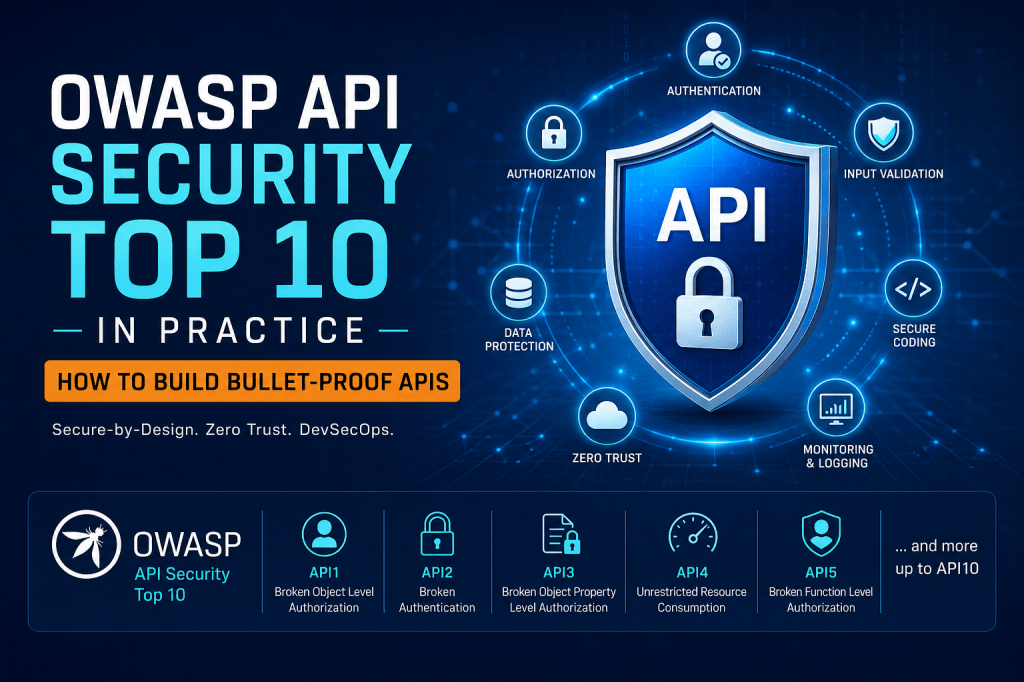
APIs have become the backbone of modern digital ecosystems. They power mobile applications, cloud-native platforms, partner integrations, AI-enabled services, and enterprise microservices. While APIs accelerate innovation and business agility, they have also become one of the most attractive attack surfaces for cybercriminals.
According to industry reports, API-related incidents continue to rise because attackers increasingly target business logic rather than infrastructure. Many organizations invest heavily in network security but overlook API-level controls, leaving critical data and services exposed.
As developers and architects, our responsibility extends beyond functionality and performance. We must design APIs that are secure, resilient, and capable of defending against evolving threats.
This is where the OWASP API Security Top 10 becomes invaluable.
Rather than viewing OWASP as a compliance checklist, organizations should treat it as a practical framework for building secure-by-design APIs.
Why API Security Matters
Traditional web security focused on protecting applications through firewalls and network boundaries.
Modern applications operate differently.
They expose:
- Customer data
- Financial transactions
- Business workflows
- AI services
- Partner integrations
through APIs.
As organizations adopt microservices and cloud-native architectures, APIs effectively become the front door to the business.
A single insecure API can expose millions of records.
Understanding the OWASP API Security Top 10
The OWASP API Security Top 10 identifies the most common and impactful API security risks.
The most important lesson:
Most API breaches occur because of broken authorization and business logic flaws rather than encryption failures.
Let’s examine the key risks and practical mitigation strategies.
API1: Broken Object Level Authorization (BOLA)
BOLA remains the most critical API vulnerability.
Vulnerable Request
GET /claim/123
An attacker changes the identifier:
GET /claim/124
If ownership validation is missing, sensitive customer data may be exposed.
Why It Happens
Developers often validate authentication but forget to verify ownership of the requested resource.
Secure Design Pattern
🔐 Authenticate
│
▼
👤 Authorize
│
▼
🛡️ Validate Ownership
│
▼
📦 Return Resource
Mitigation
- Resource-level authorization
- Ownership validation
- Policy-based access control
- Automated authorization testing
API2: Broken Authentication
Weak authentication mechanisms allow attackers to impersonate legitimate users.
Common causes include:
- Weak passwords
- Long-lived tokens
- Missing MFA
- Improper session management
Recommended Controls
- OAuth2
- OpenID Connect
- Multi-Factor Authentication
- JWT validation
- Token expiration and rotation
Secure Authentication Flow
👤 User
│
▼
🔐 Identity Provider
│
▼
🎫 Access Token
│
▼
🌐 API Gateway
│
▼
⚙️ Backend Services
API3: Broken Object Property Level Authorization
Modern APIs often expose objects containing sensitive properties.
Example:
{ "claimId": 123, "claimType": "Life", "creditLimit": 50000, "isAdmin": true}
A consumer may only require a subset of this information.
Mitigation
- Field-level authorization
- Data classification
- Response filtering
- Principle of least privilege
API4: Unrestricted Resource Consumption
Attackers can overwhelm APIs using excessive requests.
Consequences include:
- Service outages
- Increased cloud costs
- Denial of service
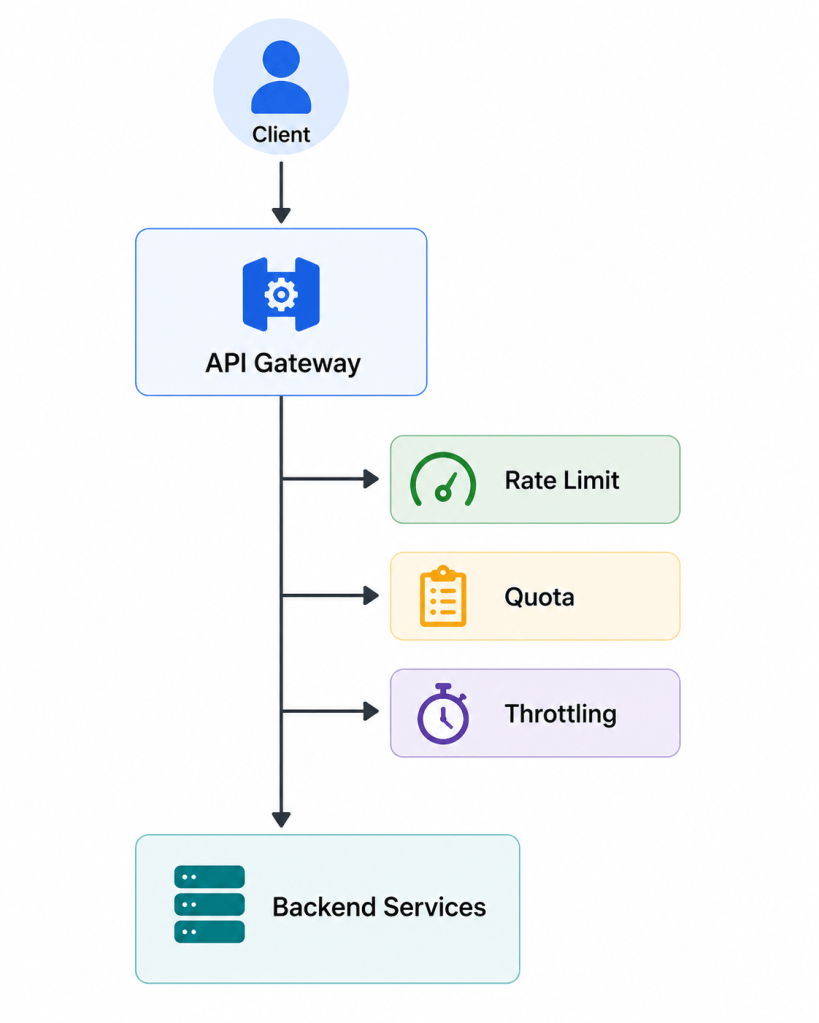
Protection Mechanisms
- Rate limiting
- Request quotas
- Throttling
- Circuit breakers
Gateway Protection Model
API5: Broken Function Level Authorization
Users gain access to functions they should not perform.
Example:
POST /admin/create-claim
A regular user should never access administrative operations.
Mitigation
- RBAC
- ABAC
- Policy-based authorization
- Endpoint segregation
API6: Unrestricted Access to Sensitive Business Flows
Attackers increasingly target business workflows rather than technical vulnerabilities.
Examples:
- Automated account creation
- Credential stuffing
- Fraudulent purchases
- Reward abuse
Protection Strategies
- CAPTCHA
- Behavioral analytics
- Fraud detection
- Transaction monitoring
API7: Server-Side Request Forgery (SSRF)
SSRF occurs when an API retrieves remote resources without validation.
Example
GET /fetch?url=http://internal-system
Attackers may access:
- Internal services
- Cloud metadata endpoints
- Private networks
Mitigation
- Allow-listed destinations
- Network segmentation
- URL validation
- Outbound traffic controls
API8: Security Misconfiguration
Security misconfigurations remain one of the most common causes of breaches.
Examples:
- Default credentials
- Excessive permissions
- Public cloud storage
- Debug endpoints enabled
Best Practices
- Infrastructure as Code
- Security baselines
- Automated compliance checks
- Configuration reviews
API9: Improper Inventory Management
Organizations often lose visibility into their APIs.
Common issues:
- Shadow APIs
- Deprecated versions
- Forgotten endpoints
Mitigation
- API cataloging
- API lifecycle governance
- Automated discovery
- Version management
API10: Unsafe Consumption of APIs
Modern applications frequently consume third-party APIs.
Risks include:
- Malicious responses
- Dependency vulnerabilities
- Data poisoning
Mitigation
- Input validation
- Schema validation
- API reputation checks
- Dependency scanning
Building Bullet-Proof APIs with AWS
A secure API platform requires multiple layers of protection.
Reference Architecture
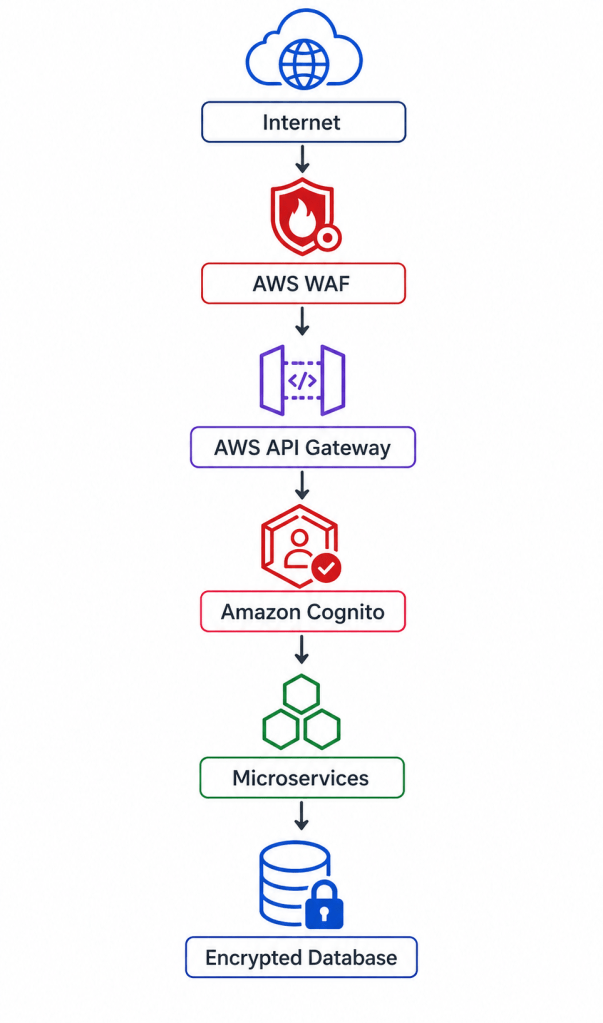
AWS WAF
Protects against:
- Injection attacks
- OWASP threats
- Bot traffic
- Malicious requests
AWS API Gateway
Provides:
- Authentication
- Authorization
- Rate limiting
- Request validation
- Monitoring
Amazon Cognito
Handles:
- User authentication
- OAuth2
- OpenID Connect
- Identity federation
Zero Trust for APIs
Traditional security relied on network trust.
Modern APIs require continuous verification.
Zero Trust Principles
- Verify explicitly
- Use least privilege
- Assume breach
API Validation Model
🔐 Identity
↓
👤 Authorization
↓
✅ Validation
↓
📊 Monitoring
↓
🚀 Access
Every request must prove trustworthiness before access is granted.
Secure Service-to-Service Communication
Many organizations secure external users but overlook internal APIs.
Every service interaction should be authenticated.
Secure Internal Communication
⚙️ Service A ⇄ 🔒 mTLS + 🎫 JWT ⇄ ⚙️ Service B
Recommended controls:
- Mutual TLS
- Service identity
- Certificate rotation
- Token validation
Integrating Security into DevOps
Security should be automated throughout the SDLC.
DevSecOps Pipeline
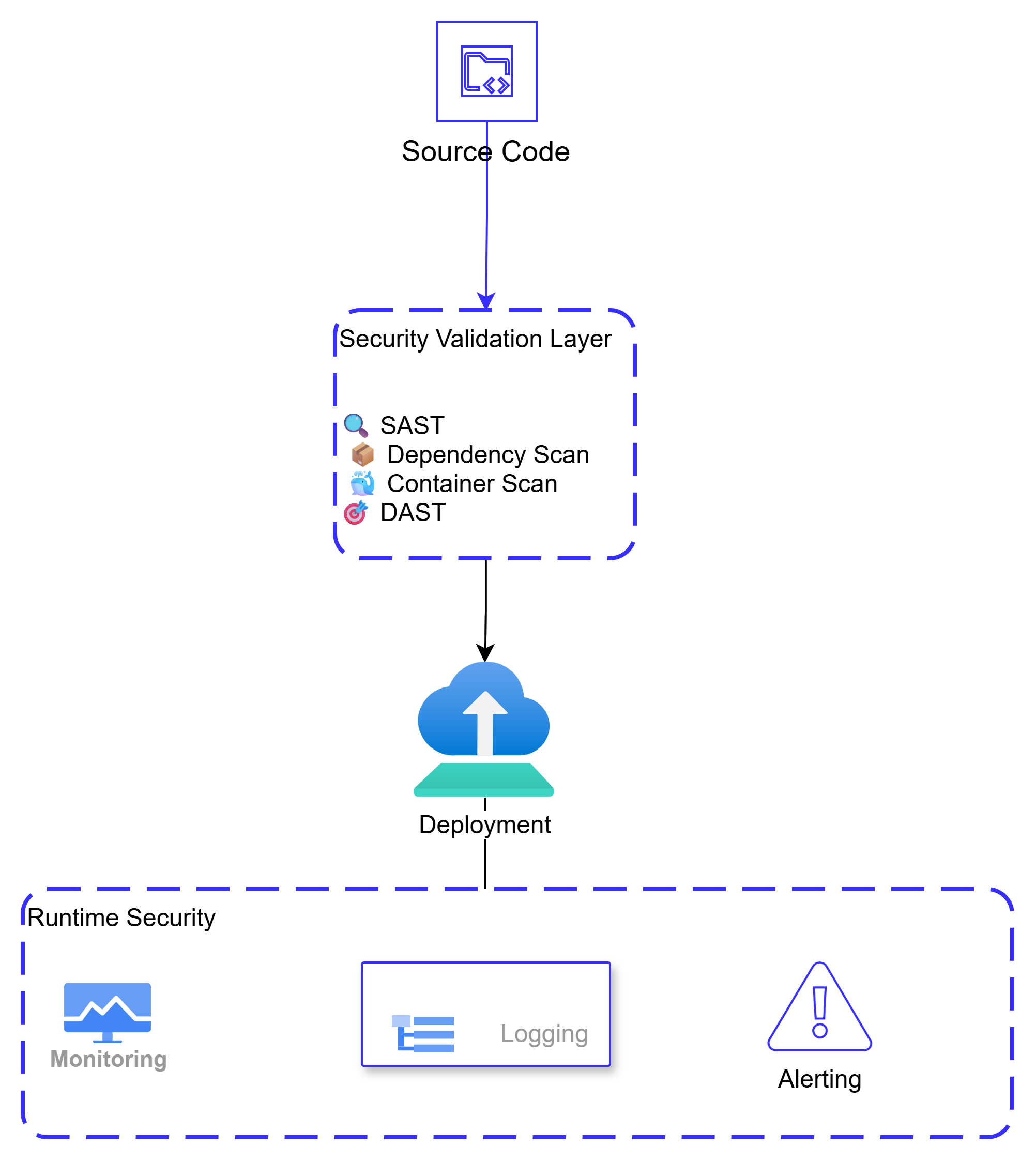
Security becomes a continuous process rather than a release checkpoint.
Monitoring and Detection
Even the strongest preventive controls must be supported by visibility.
Monitor:
- Authentication failures
- Authorization violations
- Traffic anomalies
- API abuse patterns
- SSRF attempts
Tools may include:
- CloudWatch
- SIEM
- Splunk
- ELK Stack
- OpenTelemetry
Key Takeaways
Building bullet-proof APIs requires more than implementing authentication.
Organizations must:
✅ Address OWASP API Top 10 risks
✅ Implement OAuth2 and OpenID Connect
✅ Enforce resource-level authorization
✅ Apply Zero Trust principles
✅ Use API gateways as security enforcement points
✅ Secure service-to-service communication
✅ Automate security testing through DevSecOps
✅ Continuously monitor API activity
The most successful organizations treat API security as an architectural discipline rather than a compliance requirement. By integrating security into design, development, deployment, and operations, teams can build resilient APIs that enable innovation while protecting critical business assets.
Author: Namrta Pandey
Principal Solution Designer | Technical Lead | Cloud & Security Architect
NeuralNams.com
Architecture. Security. Cloud. Code. Leadership.

 neuralnams
Leave a comment