

Introduction
APIs have become the backbone of modern digital platforms. They power mobile applications, partner integrations, cloud-native services, AI-powered systems, and enterprise ecosystems. As organizations accelerate their digital transformation initiatives, APIs are no longer just integration mechanisms—they are business-critical assets.
Unfortunately, APIs have also become one of the most attractive attack surfaces for cybercriminals. Traditional perimeter-based security models are no longer sufficient in a cloud-first, API-driven world.
A fundamental shift is underway in cybersecurity: trust is no longer determined by network location but by verified identity, making identity the new security perimeter.
This is where Secure-by-Design principles become essential.
Rather than treating security as a final validation step, Secure-by-Design integrates security into every stage of the API lifecycle—from architecture and development to deployment and operations.
Why Traditional API Security Falls Short
Historically, security relied heavily on network boundaries.
Traditional Security Model
🌐 Internet │ ▼🛡️ Firewall │ ▼💻 Application
Once traffic passed through the perimeter, it was often trusted.
Modern architectures have fundamentally changed this model.
Organizations now operate:
- Cloud-native platforms
- Microservices architectures
- Mobile applications
- Partner ecosystems
- Multi-cloud environments
As a result, APIs are continuously exposed to both internal and external consumers.
Security must therefore move closer to the application and identity layers.
What Does Secure-by-Design Mean?
Secure-by-Design is the practice of embedding security into architectural decisions from the very beginning.
Instead of asking:
How do we secure this API?
We should ask:
How do we design this API securely from day one?
This mindset shifts security from a compliance exercise to an architectural principle.
The key pillars include:
- Strong Authentication
- Fine-Grained Authorization
- Zero Trust Principles
- Threat Modeling
- Defense in Depth
- Secure Defaults
- Continuous Monitoring
Identity as the New Security Perimeter
In modern architectures, identity has become the primary mechanism for establishing trust.
Zero Trust Model
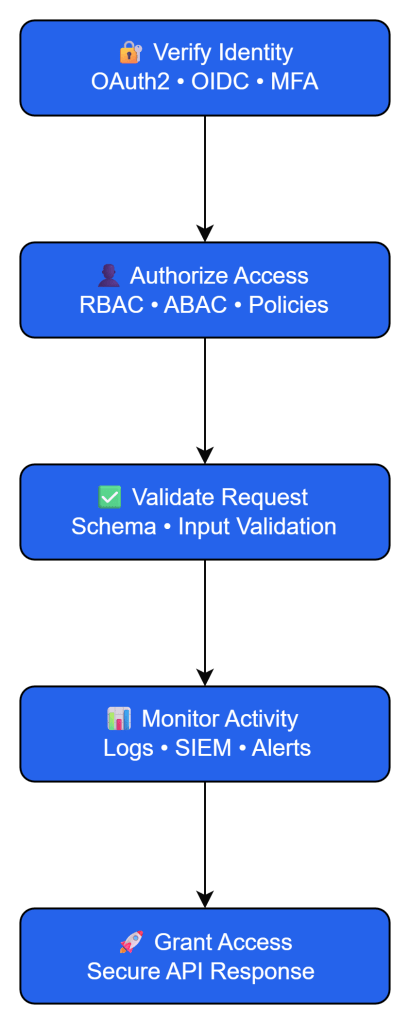
Every request must be:
- Authenticated
- Authorized
- Validated
- Logged
regardless of where it originates.
The principle is simple:
Never Trust. Always Verify.
Core Principles of Secure-by-Design APIs
1. Strong Authentication
Authentication validates who is accessing the API.
Modern APIs should leverage:
- OAuth2
- OpenID Connect (OIDC)
- JWT Tokens
- Multi-Factor Authentication
OAuth2 Authentication Flow
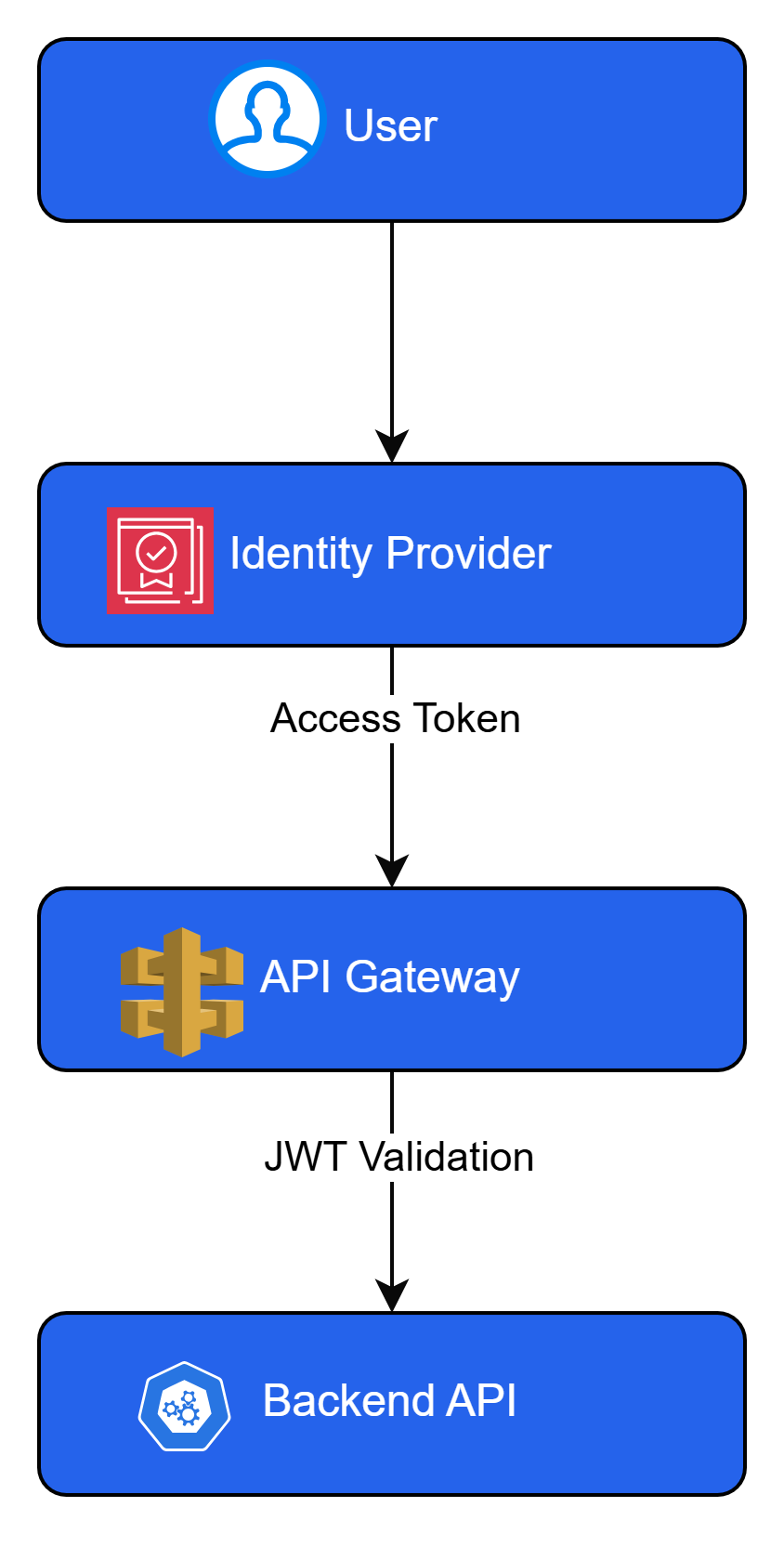
Best practices include:
- Short-lived access tokens
- Token audience validation
- PKCE support
- Secure token storage
2. Fine-Grained Authorization
Authentication answers:
Who are you?
Authorization answers:
What are you allowed to do?
One of the most common API vulnerabilities is Broken Object Level Authorization (BOLA).
Example
GET /customers/123
An attacker modifies the request:
GET /customers/124
Without proper ownership validation, sensitive data may be exposed.
Secure Authorization Flow
User Request
│
▼
🔐 Authenticate
│
▼
👤 Authorize
│
▼
🛡️ Validate Resource Ownership
│
├── ❌ Not Owner → 403 Forbidden
│
└── ✅ Owner
│
▼
📦 Return Data
Authorization must be enforced at every resource access.
3. Threat Modeling Before Development
Threat modeling is one of the most overlooked aspects of API design.
Before development begins, architects should identify:
- Assets
- Threat Actors
- Trust Boundaries
- Attack Paths
- Security Controls
Threat Modeling Framework
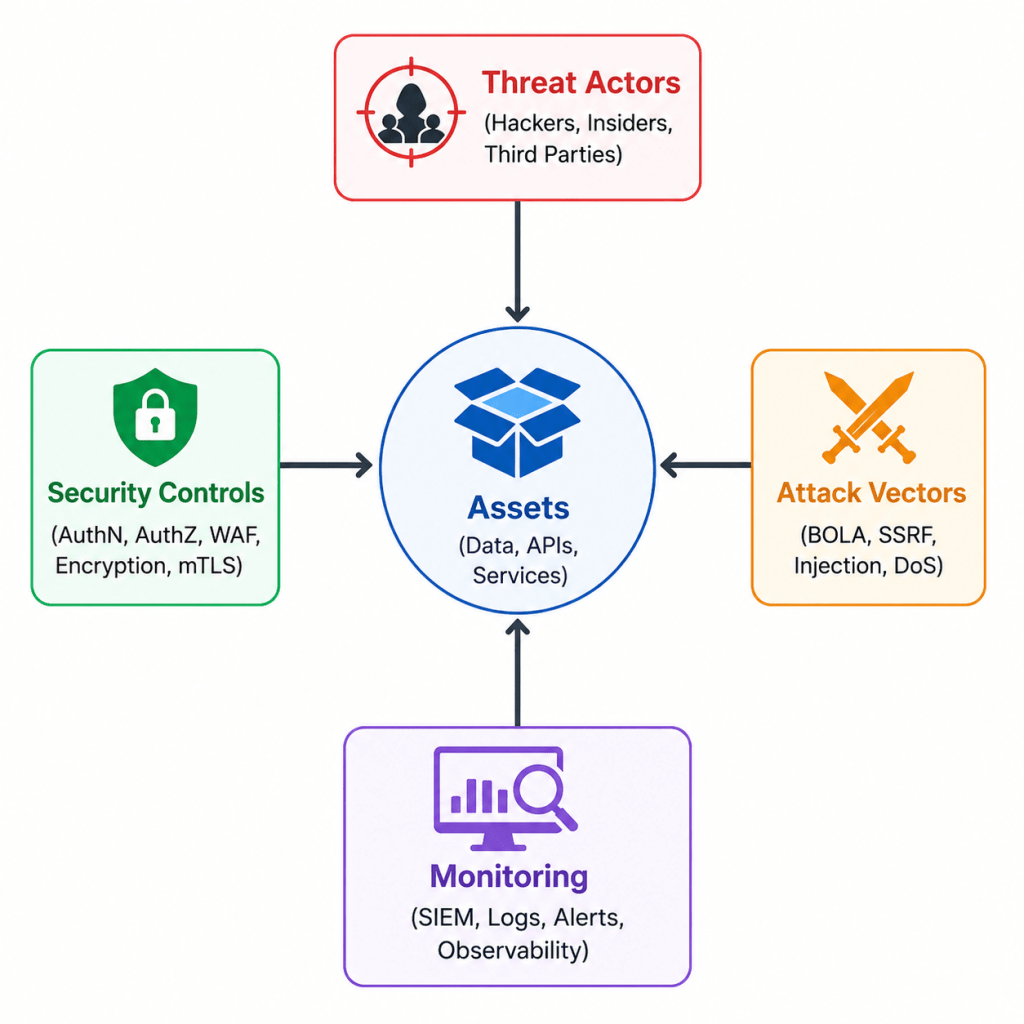
Questions to ask:
- What data are we protecting?
- Who can access it?
- How could it be abused?
- How would we detect misuse?
Defense in Depth
No single security control is sufficient.
Modern APIs require multiple layers of protection.
Defense-in-Depth Architecture
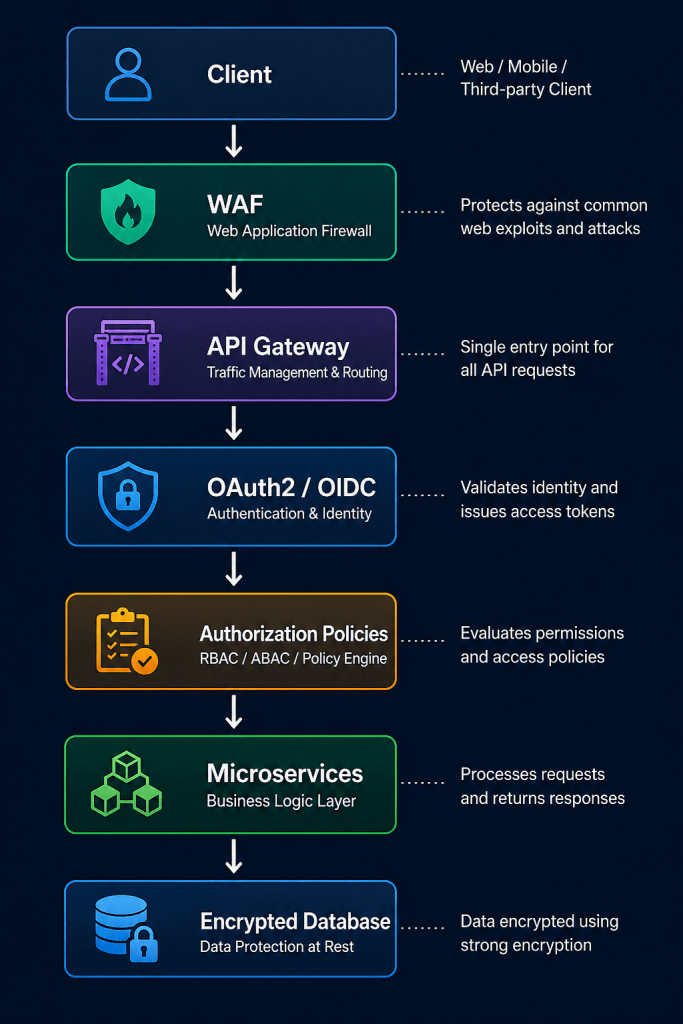
Each layer provides independent security controls.
If one layer fails, additional layers continue to provide protection.
The Role of API Gateways
API Gateways serve as centralized security enforcement points.
Capabilities include:
- Authentication
- Authorization
- Rate Limiting
- Request Validation
- Traffic Monitoring
- Threat Protection
AWS API Security Architecture
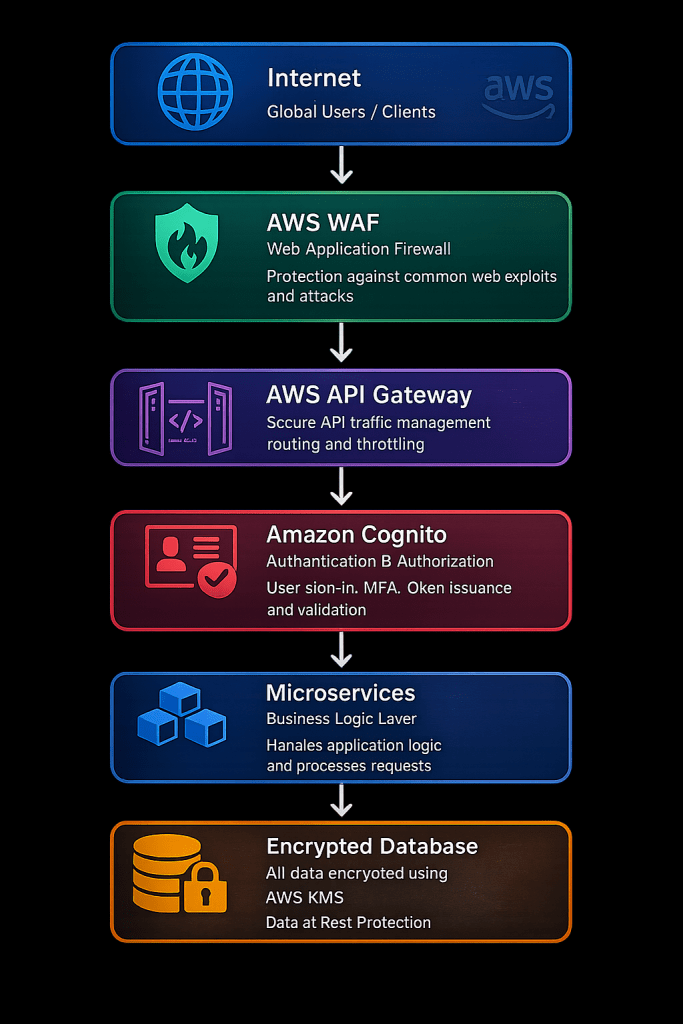
Benefits include:
- Centralized policy enforcement
- Improved visibility
- Reduced attack surface
- Consistent security controls
Securing Service-to-Service Communication
Many organizations focus heavily on user authentication while overlooking internal service communication.
Every service interaction should be treated as untrusted.
Service-to-Service Security
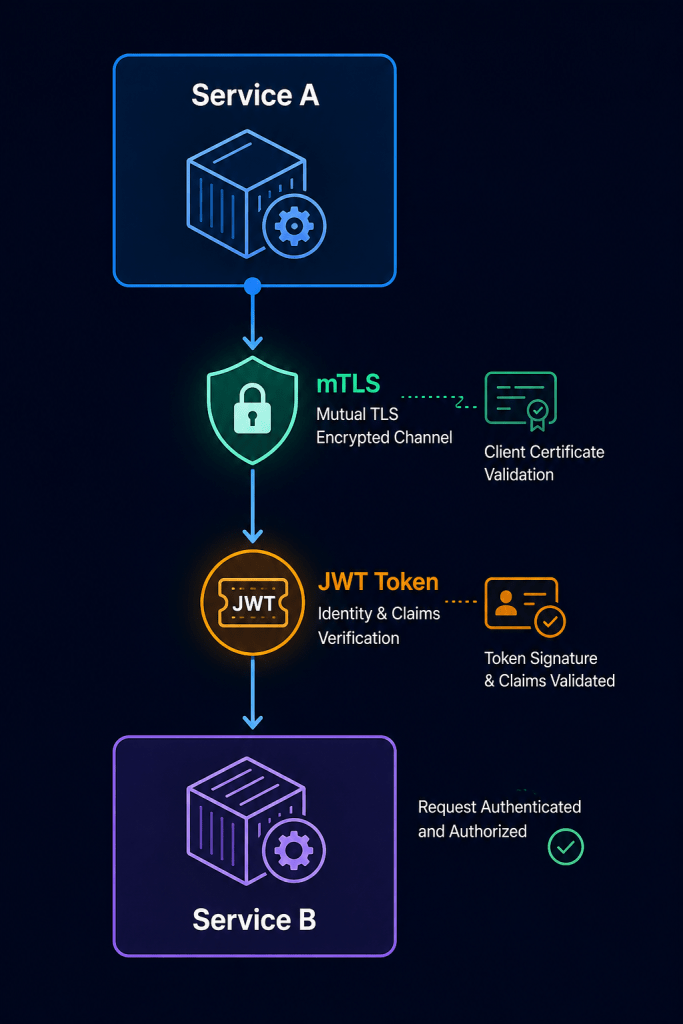
Recommended controls:
- Mutual TLS (mTLS)
- Service Identity
- JWT Validation
- Certificate Rotation
This eliminates implicit trust within the network.
DevSecOps: Shifting Security Left
Security should be integrated directly into delivery pipelines.
Secure CI/CD Pipeline
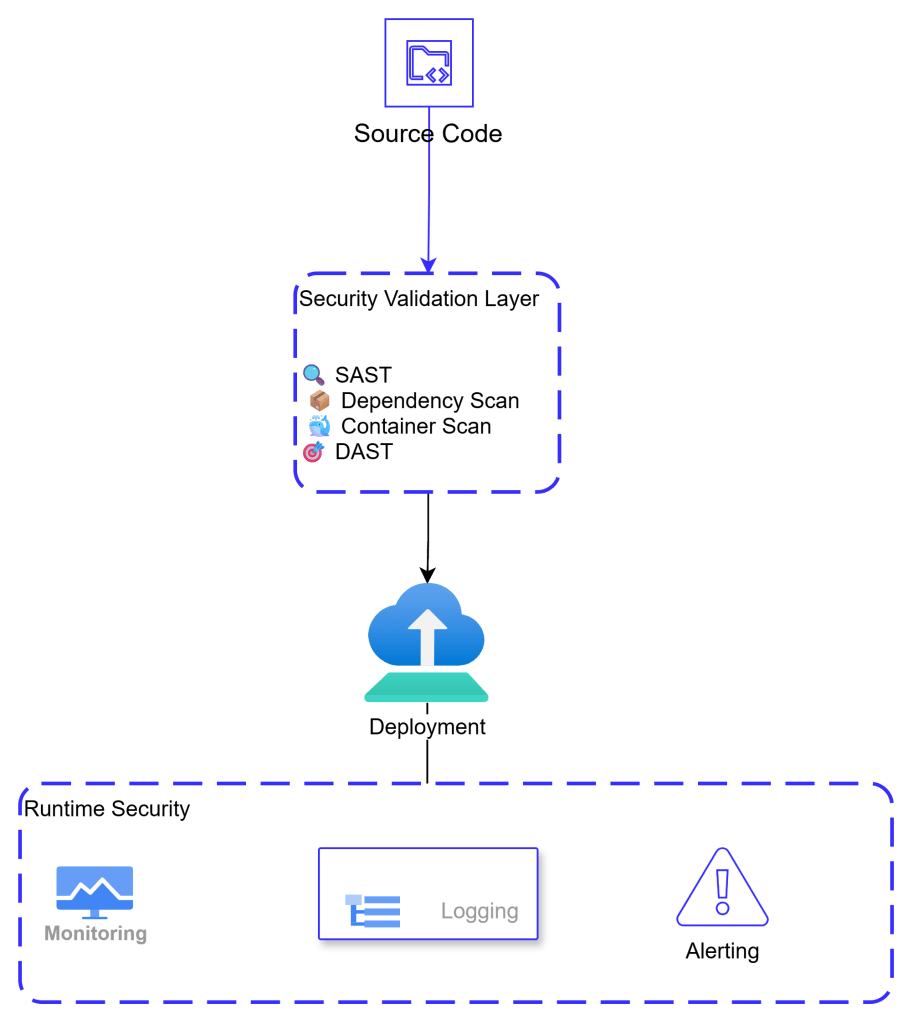
Benefits include:
- Early vulnerability detection
- Reduced remediation costs
- Continuous compliance
- Faster secure delivery
Monitoring and Observability
Even the best security controls are ineffective without visibility.
Organizations should monitor:
- Authentication failures
- Authorization violations
- Suspicious API usage
- Rate limit violations
- Traffic anomalies
Key monitoring platforms include:
- CloudWatch
- Splunk
- ELK Stack
- Security Information and Event Management (SIEM) solutions
Secure-by-Design API Reference Architecture
A modern Secure-by-Design API platform should look like:
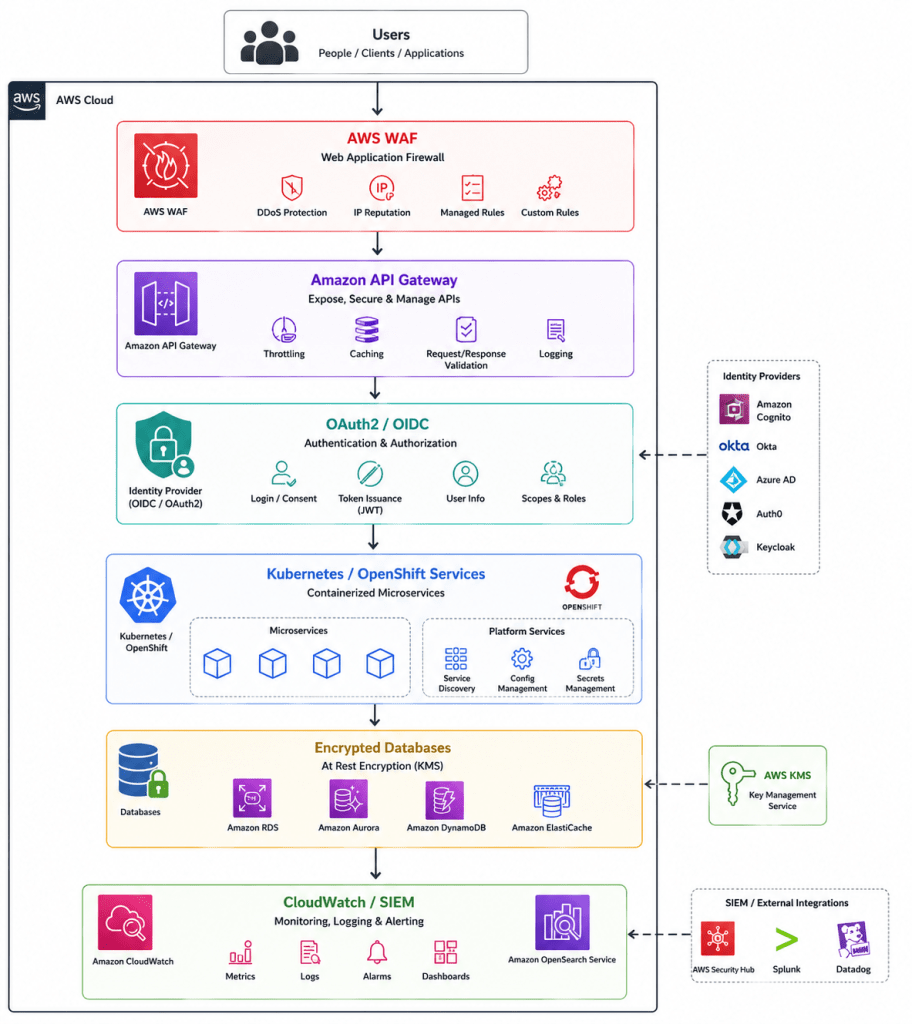
Security is applied at every layer rather than relying on a single perimeter defense.
Key Takeaways
Secure-by-Design APIs are not achieved through a single tool or technology. They are the result of architectural decisions that prioritize security from the outset.
Organizations should:
✅ Implement OAuth2 and OpenID Connect
✅ Enforce fine-grained authorization
✅ Apply Zero Trust principles
✅ Perform threat modeling during design
✅ Use API Gateways as security control points
✅ Secure service-to-service communication
✅ Automate security testing through DevSecOps
✅ Continuously monitor API activity
As APIs continue to power digital transformation, security must evolve from an afterthought to a foundational design principle. The future of API security lies in continuous verification, least-privilege access, and security embedded into architecture from day one.
Author: Namrta Pandey
Architect | Coder | Security-First Engineer | Technology Leader

 neuralnams
Leave a comment